
A no-hype buyer's guide to picking a VPS that runs a smooth Minecraft server — the specs that actually matter and how to size a plan for your player count.
Picking a VPS for Minecraft is less about the biggest number on the spec sheet and more about the *right* numbers. This guide walks through what genuinely affects tick rate and player experience, so you can buy a plan that runs smoothly instead of overpaying or under-provisioning.
Why Minecraft is CPU-bound, not RAM-bound
Vanilla Minecraft (and most plugin servers) run the world simulation on a single main thread. That means raw single-core performance matters far more than core count. A CPU with strong per-core clock speed will hold a stable 20 TPS with more players than a many-core chip with weak individual cores.
When comparing hosts, look for:
- High single-thread performance — modern CPUs, not recycled 2015-era silicon.
- Dedicated or lightly-shared vCPU — noisy neighbours on oversold nodes cause tick lag.
- NVMe SSD storage — chunk loading and world saves hammer the disk; NVMe removes stutter.
How much RAM you actually need
RAM is where people over-buy. A rough, defensible guide for a Paper/Spigot server:
- 2 GB: vanilla or lightly-plugged, ~5 players.
- 4 GB: a solid all-rounder for ~10 players with plugins.
- 6–8 GB: larger plugin set or a small modpack, ~20 players.
- 12 GB+: heavy modpacks (Forge/Fabric) with 20+ players.
Modpacks are the exception — Forge and Fabric packs are memory-hungry and benefit from more RAM. For a deeper breakdown, see our guide to the best VPS specs for a Minecraft server and how much RAM and CPU a game server needs.
Set your Java heap correctly
More RAM only helps if Java can use it. Allocate a fixed heap with -Xms and -Xmx set to the same value to avoid resize pauses:
java -Xms4G -Xmx4G -jar paper.jar noguiLeave ~1 GB of the VPS free for the OS — on a 4 GB plan, give Java 3 GB, not 4.
Bandwidth, ports and location
Minecraft traffic is light per player, but latency is everything. Choose a data-centre region close to your players — ping under ~60 ms feels crisp. You'll also need to open the default port:
sudo ufw allow 25565/tcpIf you plan to run several servers or a network, read how to host multiple websites on one VPS — the same isolation principles apply to game instances.
Managed panels vs raw root
You can run a server straight from SSH, or install a panel like Pterodactyl for a web UI. A VPS gives you full root access either way, so you're never boxed in. If you're new to the command line, our walkthrough on how to set up a Minecraft server on a VPS covers the whole flow from a fresh box to a joinable IP.
Optimise for smooth TPS, not just specs
Buying the right box is half the job; configuration does the rest. A few high-impact tweaks keep tick rate stable as your server fills:
- Use Paper (or Purpur), not vanilla, for a busy server. Paper's optimisations and configurable settings handle more players on the same hardware.
- Tune view-distance and simulation-distance. Dropping view-distance from 10 to 6–8 in
server.propertiesis often the single biggest performance win, cutting the chunks the server must keep loaded. - Cap the entity count. Mob farms and dropped-item piles quietly eat CPU; Paper lets you limit per-chunk entities.
- Pre-generate the world with a plugin so the server isn't generating fresh chunks while players explore — chunk generation is one of the heaviest live operations.
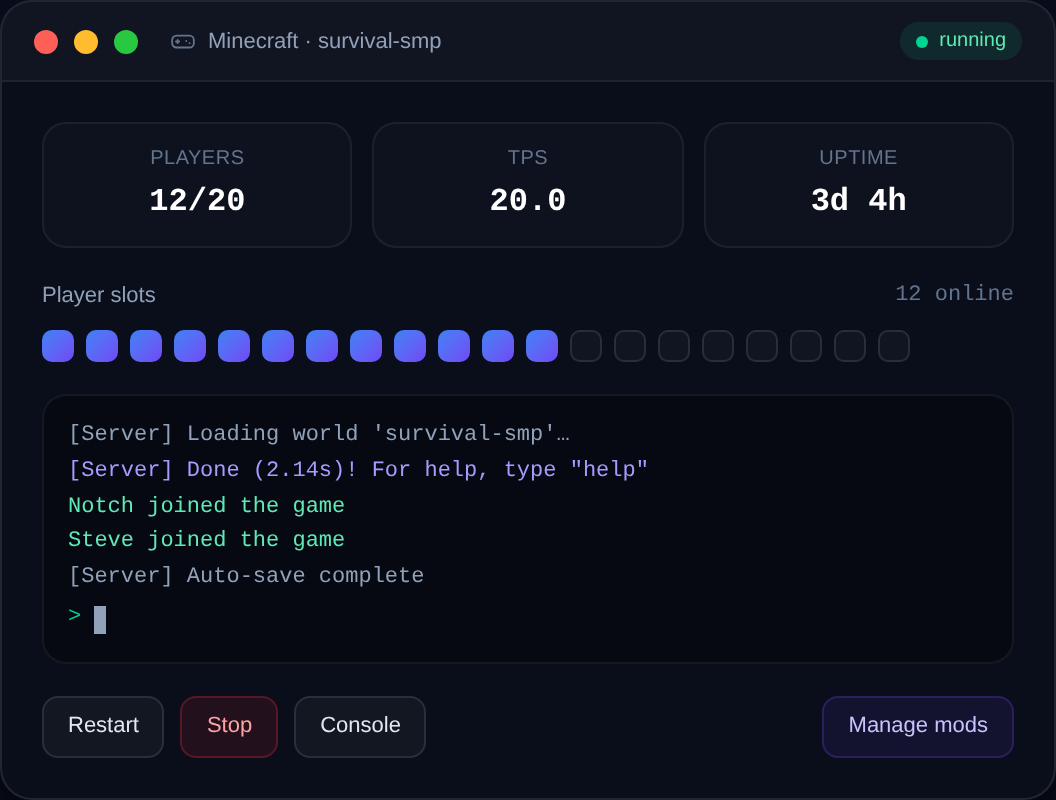
Watch actual performance with the in-game /tps command (via a plugin like Spark) rather than guessing. If TPS dips below 20 with RAM to spare, you're CPU-bound and should tune settings or move to stronger cores. Our guide to reducing Minecraft server lag goes deeper, and the best Minecraft server plugins covers tools that help.
Keep it online and backed up
A game server is only as good as its uptime. Two habits matter:
- Automate restarts. A nightly restart clears memory and applies updates; wire it up with systemd and cron so it happens without you.
- Back up the world regularly. Worlds represent real player effort — a scheduled backup of the world folder to off-server storage saves you from corruption or a bad update. See how to back up your game server.
With full root on a VPS, both are a few minutes of setup and then run themselves — a big reason a VPS beats a locked-down game panel for a server you care about.
Where Nxeon fits
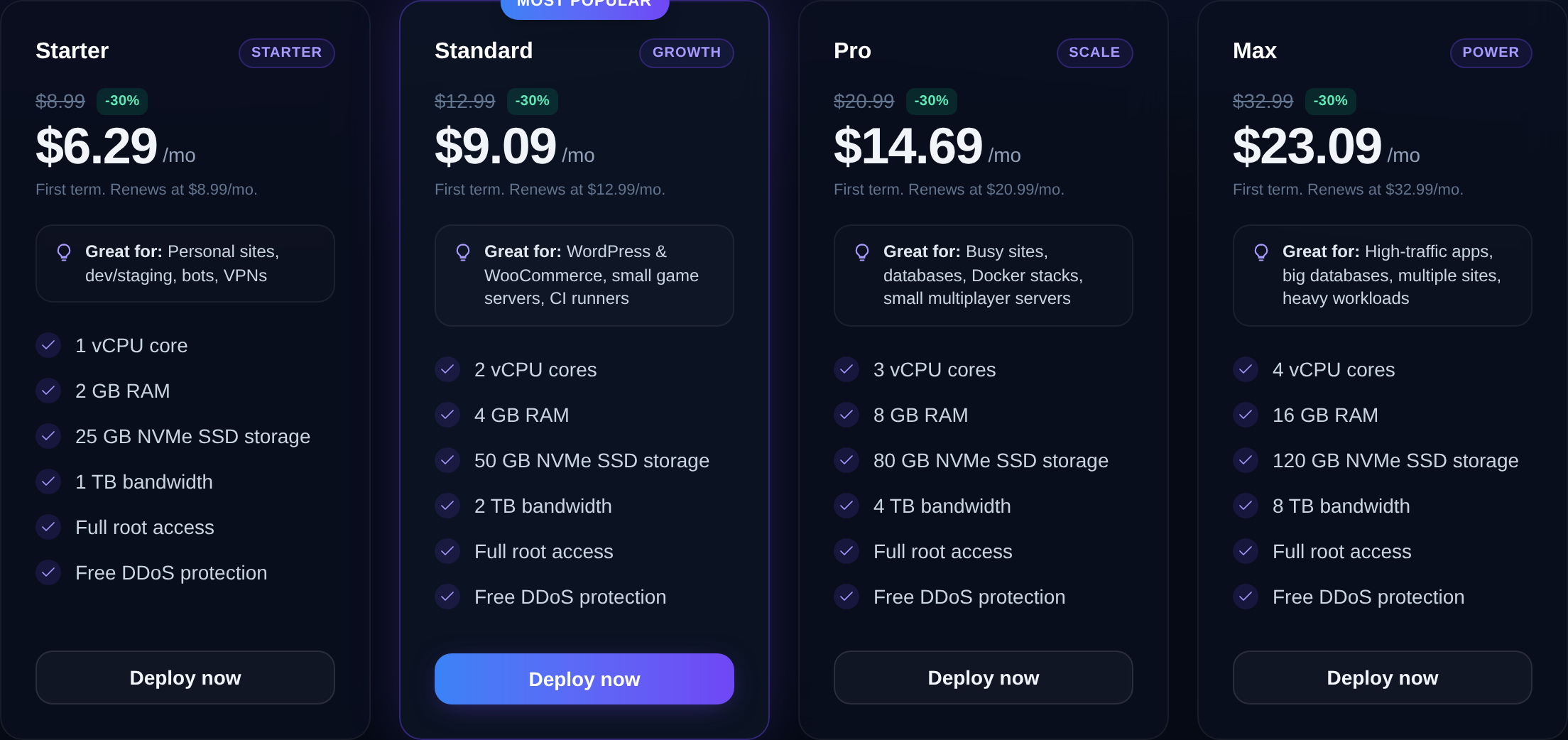
Nxeon runs NVMe-backed KVM VPS plans with modern CPUs, one-click OS images and full root — a good honest fit for Minecraft because you control the Java version, plugins and restarts. There's Minecraft-focused hosting if you want a head start, and transparent VPS pricing so you can match a plan to your player count without guessing.
A quick buying checklist
- Prioritise single-thread CPU over core count.
- Match RAM to your player count and plugin/modpack load.
- Insist on NVMe storage.
- Pick a region near your players.
- Make sure you get full root so you can tune and update freely.
FAQ
How much RAM do I need for a 10-player Minecraft server?
Around 4 GB is a comfortable target for ~10 players on a Paper server with a normal plugin set. Give Java about 3 GB of that and leave the rest for the operating system.
Is a VPS better than a shared Minecraft host?
For control and consistency, yes. A VPS gives you full root, your choice of Java version and no hidden per-slot limits. Budget "game panel" hosts are simpler but far more restrictive.
Does core count matter for Minecraft?
Less than you'd think. The main game loop is single-threaded, so strong per-core speed matters most. Extra cores help background tasks, other plugins and running multiple servers.
What port does Minecraft use?
The Java Edition default is TCP 25565. Open it in your firewall, and forward it if you're behind NAT (a VPS with a public IP usually isn't).
Ready to size a plan? Compare NVMe options on the Nxeon pricing page or jump straight to Minecraft server hosting.
Game server hosting
Deploy in seconds, not weekends
Nxeon · Nxeon editorial
★★★★★ Straight-talking guides from the team that runs the servers.