
How much RAM does a Minecraft server actually need? Real numbers for vanilla, plugins, and modpacks by player count.
"How much RAM do I need?" is the first question when planning a Minecraft server — and the answer depends far more on what you're running than on how many players you have. Here are practical numbers you can plan a budget around.
The short answer
Rough starting points (RAM allocated to the server):
- Vanilla / small survival, up to ~10 players: 2–4 GB.
- Paper + plugins, 10–20 players: 4–6 GB.
- Light modpack (30–80 mods): 4–6 GB.
- Heavy modpack (All the Mods, 200+ mods): 8–10 GB.
- Big public network: 12 GB+.
These are for the Minecraft process itself — leave headroom for the OS.
Why mods change everything
A vanilla server is lean. Each mod adds classes, entities, world data, and tick cost. That's why a 300-mod pack can need five times the RAM of vanilla for the *same* number of players. Packs like RLCraft and Create-based packs are memory-hungry by design.
Players matter less than you'd think
More players add entity and chunk load, but doubling players rarely doubles RAM. Ten players in vanilla are comfortable on 4 GB; twenty might want 6 GB. The bigger driver is loaded chunks and entities, which is why view-distance and entity tuning affects memory as much as it affects TPS.
Don't over-allocate
It's tempting to throw all your RAM at the server, but a huge heap means longer garbage-collection pauses. Allocate what the server needs plus a modest buffer, not everything you have. Leave at least 1 GB free for the operating system. Pair your allocation with Aikar's JVM flags and set -Xmx and -Xms equal:
java -Xmx6G -Xms6G -jar server.jar noguiCheck what you're actually using
On the server, watch memory live:
free -h
htop
Inside Minecraft, Paper's /spark and the F3 debug screen (client) show heap usage. If the server sits near its max heap and GC runs constantly, allocate a bit more. If it barely touches the ceiling, you've allocated plenty.
RAM vs CPU
Here's the catch people miss: once you have enough RAM, adding more won't fix lag. Low TPS is almost always a CPU limit, because Minecraft is single-thread bound. Fast per-core performance matters more than extra gigabytes for smoothness — see the lag guide.
Leave headroom for the operating system
An important detail people miss: the number you set with -Xmx is for the Minecraft process, but the JVM uses memory *beyond* the heap (thread stacks, metaspace, off-heap buffers), and the Linux OS itself needs some. On a 4 GB server, don't allocate -Xmx4G — you'll starve the OS and risk the kernel killing the process. A safe rule:
- On a 4 GB box: allocate about 3 GB to Minecraft.
- On an 8 GB box: allocate about 6–6.5 GB.
Always leave at least 1 GB free. Check real usage with:
free -hBedrock and proxy servers
The numbers above are for Java. A Bedrock Dedicated Server is lighter and comfortably runs a small world in 1–2 GB. If you run a network with a proxy (BungeeCord/Velocity) in front of several backends, the proxy itself needs very little (512 MB–1 GB) — it just routes players — while each backend server needs its own allocation based on its type.
Right-sizing in practice
The reliable way to size a server is to start with a sensible estimate, run it, and watch. If the heap sits near its -Xmx ceiling and /spark shows constant GC, bump it up. If it barely touches the ceiling, you've allocated plenty and can leave more for the OS. Because Minecraft is CPU-bound for TPS, don't chase smoothness with RAM — once you have enough, invest in good JVM flags and the settings in our lag guide instead. And if you're weighing hosting options, a VPS versus port forwarding covers why a dedicated box beats a home PC for this.
A quick sizing table by scenario
To make it concrete, here's what to allocate to the Minecraft process in common cases (leaving the rest for the OS):
- Vanilla, 2–5 friends: 2–3 GB.
- Vanilla / Paper, up to ~15 players: 4 GB.
- Paper + plugins, 15–30 players: 6 GB.
- Light modpack (under 100 mods): 4–6 GB.
- Heavy modpack (ATM-class, 200+ mods): 8–10 GB.
- Modpack + a full group: 10–12 GB.
Treat these as starting points, then watch real usage and adjust. Remember the plan you buy needs to be *larger* than these numbers to leave room for the operating system — a "4 GB server" comfortably runs a 3 GB Minecraft allocation. And if smoothness is your goal rather than headroom, once RAM is adequate the returns come from fast per-core CPU and tuned JVM flags, not more gigabytes. See the lag guide for squeezing the most from whatever you allocate.
FAQ
Is 4 GB enough for a Minecraft server?
For vanilla or a Paper server with plugins and up to ~10–15 players, yes. Heavy modpacks need more.
Does more RAM stop lag?
Only if you were short on RAM. Beyond that, lag is a CPU/tick problem, and extra RAM can even lengthen GC pauses.
How much RAM for a modded server?
Light packs 4–6 GB, heavy 200+ mod packs 8–10 GB. Match it to the pack's own recommendation as a floor.
Should I give the server all my RAM?
No — leave at least 1 GB for the OS, and don't allocate a heap far larger than the server uses.
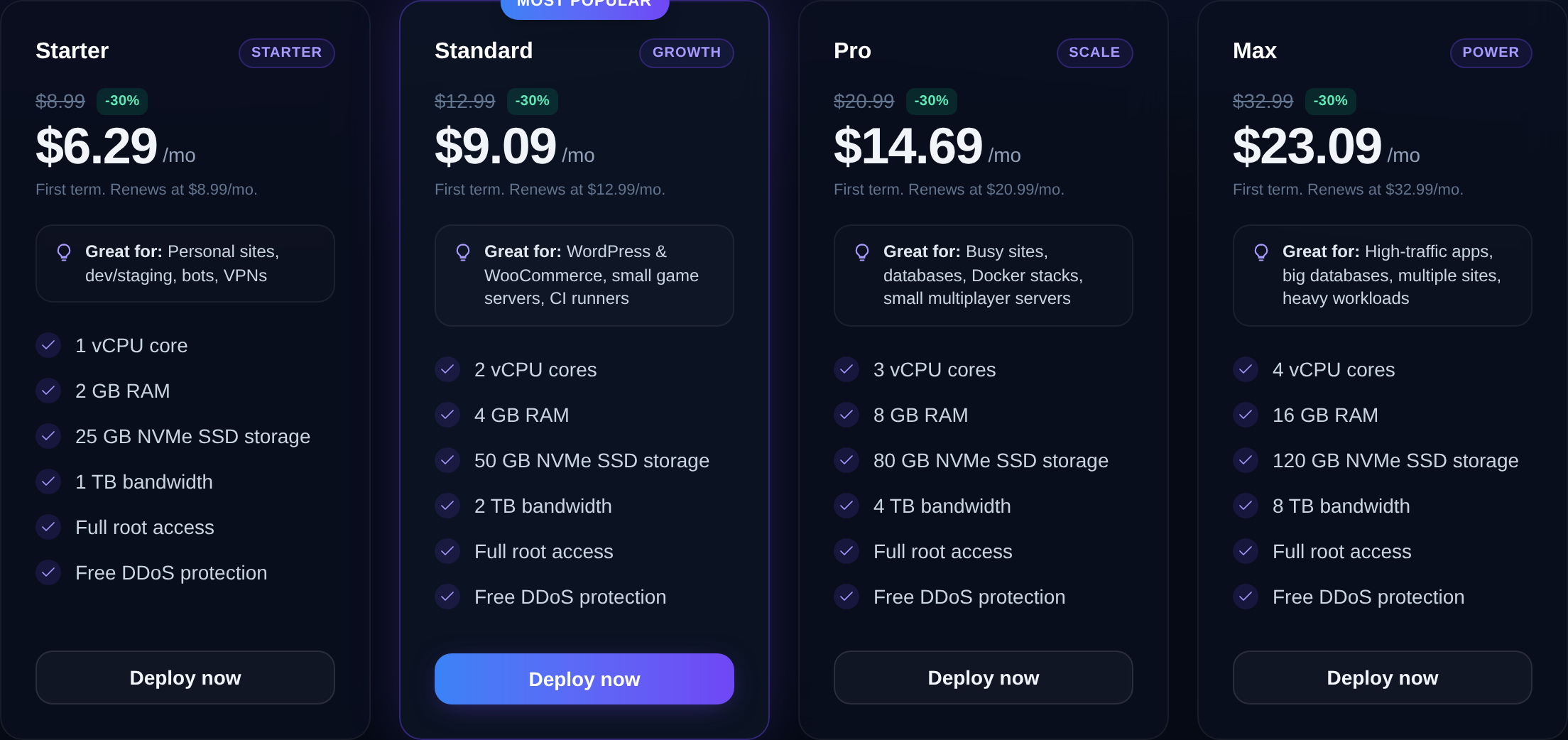
Pick a plan sized to your server type, not guesswork. Nxeon's Minecraft server hosting offers NVMe VPS plans across the memory range, with fast per-core CPU for the TPS that RAM alone can't buy.
Game server hosting
Deploy in seconds, not weekends
Nxeon · Nxeon editorial
★★★★★ Straight-talking guides from the team that runs the servers.