






The Nxeon Blog
Guides for people who run their own servers.
Straight-talking tutorials and comparisons on VPS hosting, game servers, Linux and security. No fluff, just what actually works. 346 guides from the team that runs the servers.
Search results
71 guides for “apps” · Clear search
How to Set Up Health Checks and Auto-Restart for Services
Services crash. With systemd restart policies, watchdogs and simple health checks, yours come back automatically instead of staying down until you notice.
How to Secure Docker Containers
Containers aren't secure by default. Run as non-root, drop capabilities, limit resources, scan images and lock down the daemon on your VPS.
How to Secure a MySQL Database
An exposed or default-configured database is a breach waiting to happen. Lock down MySQL/MariaDB: bind to localhost, strong users, least privilege and TLS.
How to Set Up Automatic Security Updates on Ubuntu
Unpatched software is the top cause of server compromise. Configure unattended-upgrades so security patches install themselves — safely and unattended.
How to Add Two-Factor Authentication to SSH
Add a time-based one-time code on top of your SSH key for defence in depth. Set up Google Authenticator PAM without locking yourself out.
How to Set Up a UFW Firewall on Ubuntu
UFW makes Linux firewalling approachable. Learn to allow only the ports you need, set default-deny, rate-limit SSH, and verify your rules.
How to Point a Subdomain to a Different App or Port
Run several apps on one VPS, each on its own subdomain — api.yourdomain.com, app.yourdomain.com — using a reverse proxy. DNS plus the Nginx and Caddy configs.
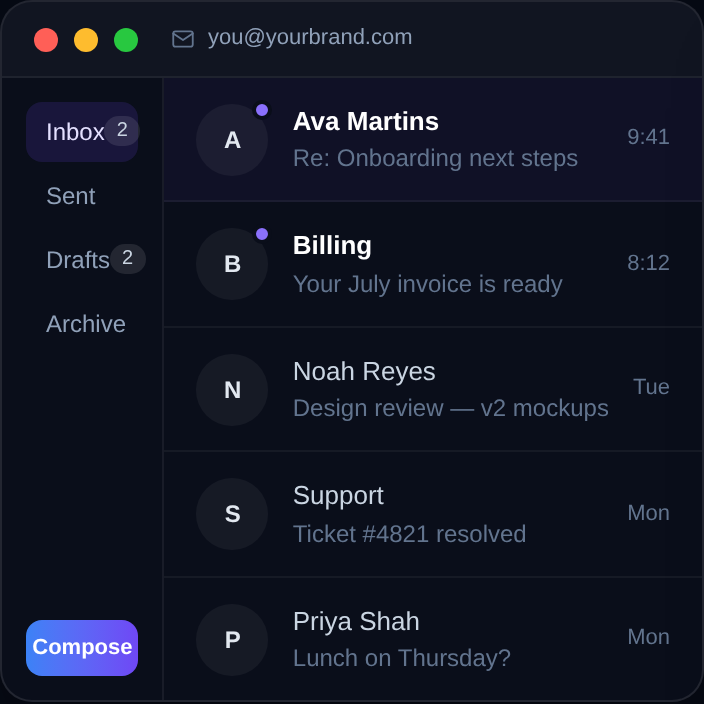
How to Set Up a Catch-All Email Address
A catch-all captures mail sent to any address at your domain — even ones that don't exist. Here's how to set one up, the real risks, and smarter alternatives.
How to Set Up MX Records for Google Workspace
The exact MX record to add so Google Workspace receives mail for your domain, plus the SPF and DKIM records that keep your sending out of spam.
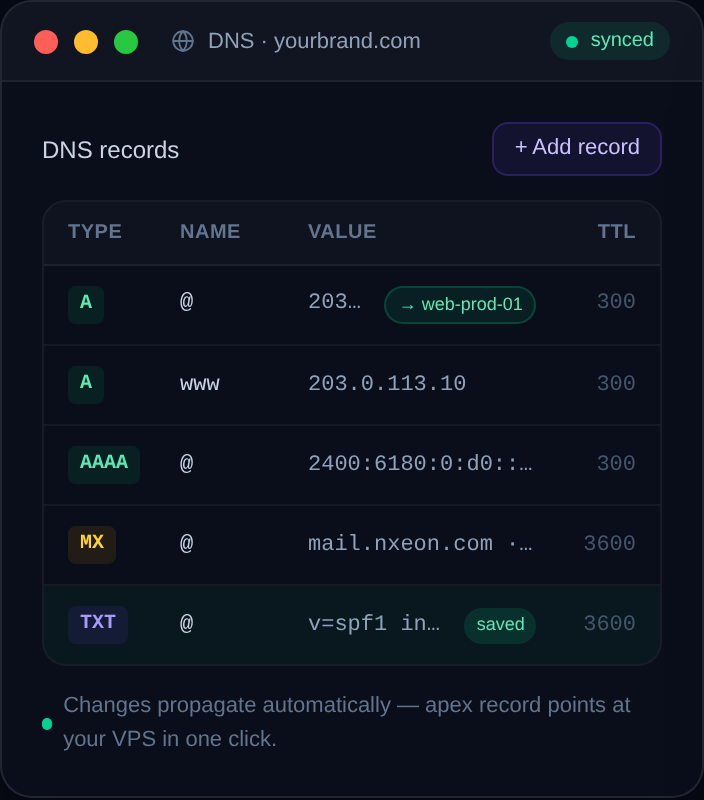
How to Set Up a Wildcard Subdomain on a VPS
A wildcard subdomain catches every subdomain at once — ideal for multi-tenant apps and dynamic subdomains. Here's the DNS record, the wildcard SSL cert, and the Nginx config.
How to Set Up an A Record for Your Server
The A record is the single most important DNS record for pointing a domain at a server. Here's exactly what it does, how to add one, and how to test it.
How to Self-Host Vaultwarden Behind an Nginx Reverse Proxy
Already run Nginx? Here's how to put Vaultwarden behind it properly — real config, Let's Encrypt TLS, WebSocket support and the security headers that matter.
Deploy your first server in under a minute.
Creating an account is free and takes no card details. Every guide here runs on a Nxeon VPS or game server.