






The Nxeon Blog
Guides for people who run their own servers.
Straight-talking tutorials and comparisons on VPS hosting, game servers, Linux and security. No fluff, just what actually works. 346 guides from the team that runs the servers.
Search results
233 guides for “eac” · Clear search
How to Create a Non-Root Sudo User on a VPS
Working as root all the time is dangerous. Create a dedicated sudo user, give it your SSH key, and adopt least-privilege as your default way of working.
How to Scan a Linux Server for Malware (rkhunter, ClamAV)
Even hardened servers get probed. Learn to scan for rootkits and malware with rkhunter and ClamAV, read the results, and respond to a real detection.
How to Manage Secrets and Environment Variables on a VPS
Hardcoded API keys and passwords in code are a breach waiting to happen. Learn to store secrets in env files, systemd, and vaults — the right way.
How to Secure Docker Containers
Containers aren't secure by default. Run as non-root, drop capabilities, limit resources, scan images and lock down the daemon on your VPS.
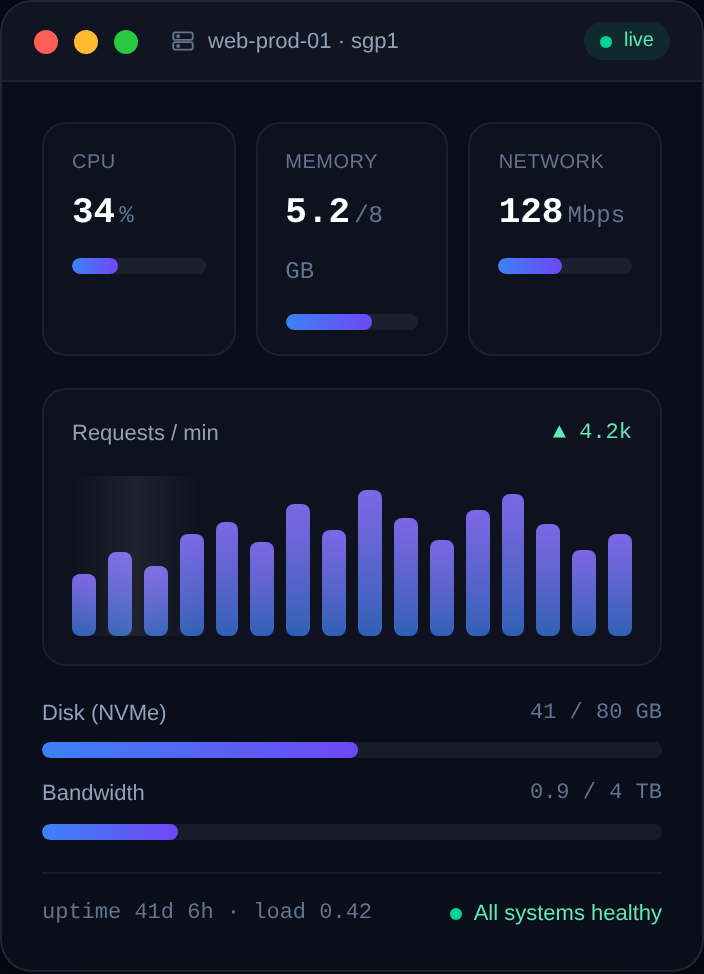
How to Monitor a Linux VPS (htop, netdata and more)
You can't fix what you can't see. Learn the essential Linux monitoring tools — from quick htop checks to a full netdata dashboard with alerts.
How to Set Up Automated Backups on a VPS
A backup you never tested isn't a backup. Build an automated, offsite, restorable backup routine for files and databases with rsync, cron and the 3-2-1 rule.
How to Secure a MySQL Database
An exposed or default-configured database is a breach waiting to happen. Lock down MySQL/MariaDB: bind to localhost, strong users, least privilege and TLS.
How to Create a Swap File on a Linux VPS
Small VPS plans run out of RAM fast. A swap file gives the kernel breathing room and prevents the OOM killer from killing your app. Here's how to add one.
How to Set Up Automatic Security Updates on Ubuntu
Unpatched software is the top cause of server compromise. Configure unattended-upgrades so security patches install themselves — safely and unattended.
DDoS Protection Basics for a VPS
What a DDoS attack actually is, what you can mitigate at the server level, and where you genuinely need upstream protection. A realistic primer.
How to Protect a VPS from Brute-Force Attacks
Bots relentlessly guess logins against every public server. Here's a layered playbook — keys, firewall, rate limits and bans — to make brute-forcing pointless.
How to Add Two-Factor Authentication to SSH
Add a time-based one-time code on top of your SSH key for defence in depth. Set up Google Authenticator PAM without locking yourself out.
Deploy your first server in under a minute.
Creating an account is free and takes no card details. Every guide here runs on a Nxeon VPS or game server.