






The Nxeon Blog
Guides for people who run their own servers.
Straight-talking tutorials and comparisons on VPS hosting, game servers, Linux and security. No fluff, just what actually works. 346 guides from the team that runs the servers.
Search results
104 guides for “systemd” · Clear search
How to Set Up Health Checks and Auto-Restart for Services
Services crash. With systemd restart policies, watchdogs and simple health checks, yours come back automatically instead of staying down until you notice.
How to Check and Free Up Disk Space on Linux
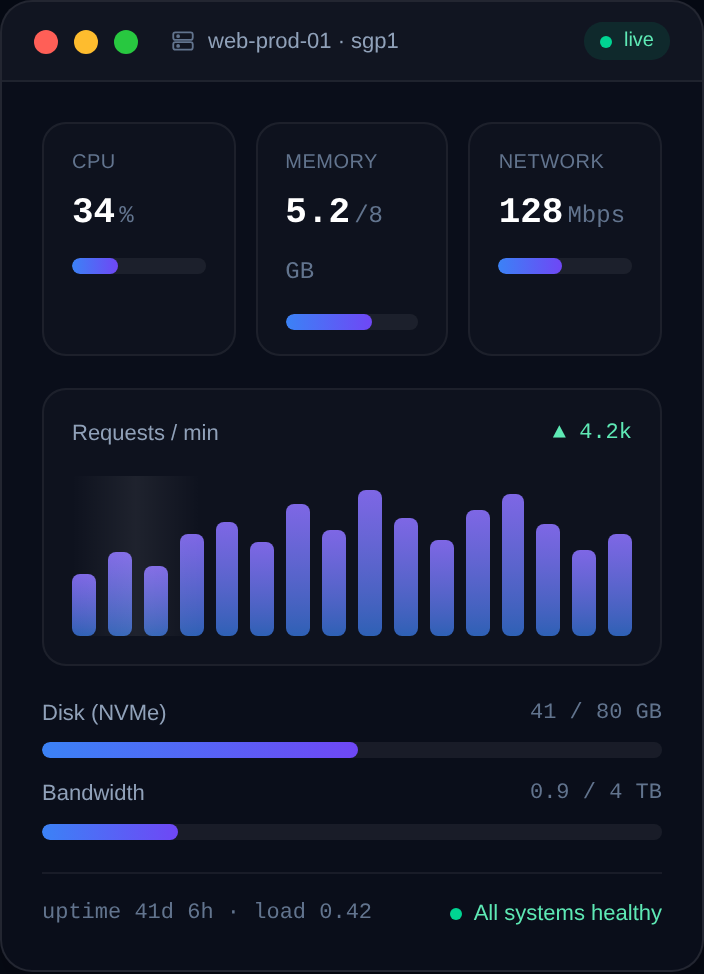
A full disk breaks databases, deploys and logins. Learn to find what's eating your space with df and du, and safely reclaim it — logs, caches and old kernels.
Essential Linux Commands Every VPS Owner Should Know
New to the command line? This is the practical toolkit — navigation, files, permissions, processes, services, networking and disk — that runs a VPS day to day.
How to Tune Linux Performance for a Busy Server
When traffic climbs, defaults hold you back. Tune file limits, network buffers, sysctl parameters and services to squeeze more out of your VPS.
How to Scan a Linux Server for Malware (rkhunter, ClamAV)
Even hardened servers get probed. Learn to scan for rootkits and malware with rkhunter and ClamAV, read the results, and respond to a real detection.
How to Manage Secrets and Environment Variables on a VPS
Hardcoded API keys and passwords in code are a breach waiting to happen. Learn to store secrets in env files, systemd, and vaults — the right way.
How to Read and Manage Linux Logs with journalctl
systemd's journal holds nearly every log on a modern Linux server. Learn to filter, follow, and prune it with journalctl so you can debug fast.
How to Monitor a Linux VPS (htop, netdata and more)
You can't fix what you can't see. Learn the essential Linux monitoring tools — from quick htop checks to a full netdata dashboard with alerts.
How to Set Up Automated Backups on a VPS
A backup you never tested isn't a backup. Build an automated, offsite, restorable backup routine for files and databases with rsync, cron and the 3-2-1 rule.
How to Protect a VPS from Brute-Force Attacks
Bots relentlessly guess logins against every public server. Here's a layered playbook — keys, firewall, rate limits and bans — to make brute-forcing pointless.
How to Disable Root Login on a VPS
The root account is every attacker's first guess. Learn to create a sudo user and disable direct root login over SSH — safely, without locking yourself out.
How to Install and Configure fail2ban
fail2ban watches your logs and automatically bans IPs that fail to log in too many times. Here's how to install it and write custom jails.
Deploy your first server in under a minute.
Creating an account is free and takes no card details. Every guide here runs on a Nxeon VPS or game server.