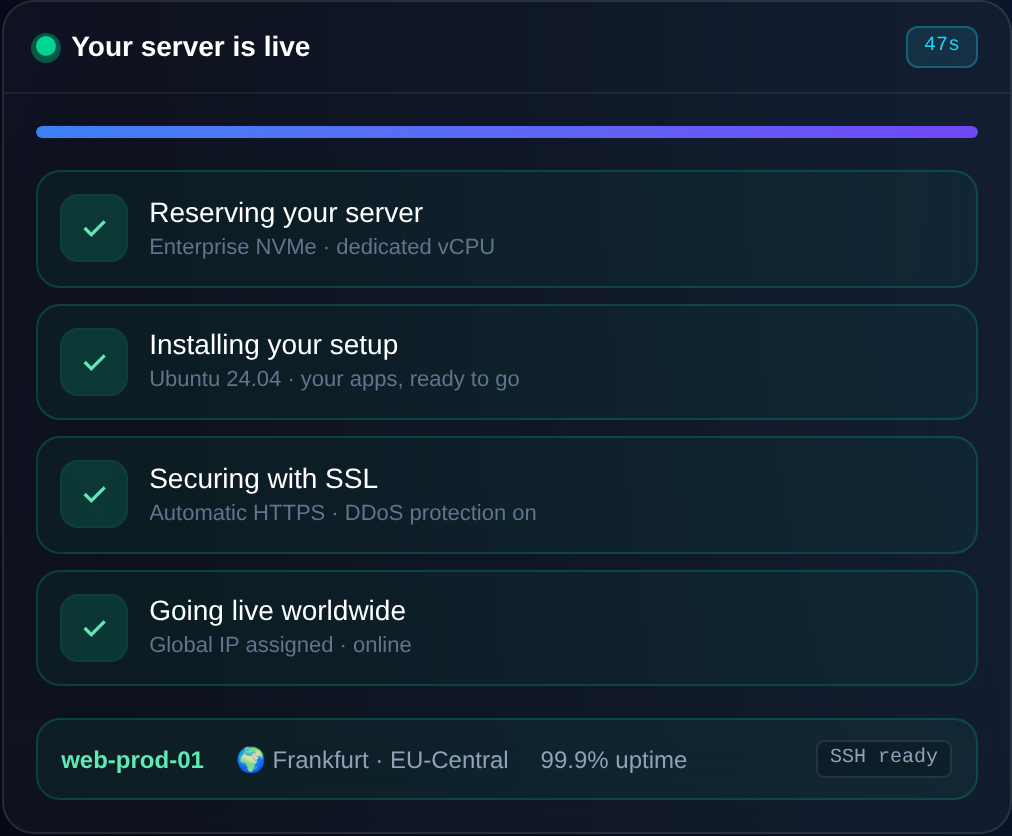
The difference is who handles the server admin — and it changes the price, your workload and your control. Here's how to decide which suits you.
The choice between a managed and an unmanaged VPS comes down to one question: who takes care of the server? That decision shapes your price, your time commitment and how much control you have. Here's a clear comparison to help you pick.
What each term means
- Unmanaged VPS: you get the server and full root, and *you* handle everything above the hardware — OS updates, security, web server, backups, troubleshooting. Cheaper, total control, more responsibility.
- Managed VPS: the provider handles server administration — updates, security hardening, monitoring, and support when things break. Costs more, saves you time and expertise.
Both give you a real VPS with dedicated resources; the difference is where the maintenance burden sits.
What "managed" typically covers
It varies by provider, but managed usually includes:
- OS and software updates and patching.
- Security hardening and monitoring.
- Backups and help restoring them.
- Support for server issues, not just "the box is on".
Unmanaged gives you none of that by default — which is fine if you're comfortable running a Linux server.
How to decide
Choose unmanaged if:
- You're comfortable on the Linux command line (or want to learn).
- You want the lowest price and total control.
- You enjoy — or don't mind — running your own server.
Choose managed if:
- You'd rather focus on your site or app than on server admin.
- You lack the time or expertise to patch and secure a server.
- Downtime is costly and you want expert support on call.
The middle path
The line isn't binary. You can run an unmanaged VPS and still make it low-effort:
- Enable automatic security updates.
- Use one-click OS/app images to skip manual installs.
- Follow a checklist like securing your first Linux VPS once, then largely leave it.
- Automate backups and monitoring.
Good tooling makes an unmanaged VPS far less work than it sounds — our first 10 minutes on a new VPS guide gets you a solid baseline fast. And if you're weighing the whole small-business picture, see best VPS for a small business website.
What you're really paying for with managed
It helps to see managed hosting as buying *time and expertise*, not just a service. The monthly premium covers work you'd otherwise do yourself — or would need to hire for:
- Patching and updates applied promptly, closing security holes before they're exploited.
- Proactive monitoring that catches a failing disk, a memory leak or an outage before it becomes your emergency.
- Security hardening done to a professional standard from day one.
- Expert support when something breaks — someone who can diagnose a server issue, not just confirm the box is powered on.
- Backup management and help restoring when you need it most.
If your business loses money during downtime, or nobody on your team is comfortable troubleshooting Linux at 2am, that premium is easily justified. If you enjoy running servers, or your budget is tight and your site can tolerate the occasional hiccup, unmanaged keeps more money in your pocket.
Being honest about your time and skills
The right choice comes down to a candid answer to two questions: *How comfortable am I with Linux server administration?* and *What is my time worth?*
- If server admin is a distraction from the work that actually grows your project — writing content, building features, serving customers — managed hosting frees you to focus, and the cost is often less than the value of the hours it saves.
- If you're a developer, a tinkerer, or someone who wants to learn how the stack fits together, unmanaged is cheaper, more flexible, and genuinely rewarding. The learning compounds: skills you build once serve every future project.
There's no universally correct answer — only the one that fits your situation. And because the underlying VPS is the same either way, you can change your mind later without changing platforms.
Where Nxeon fits
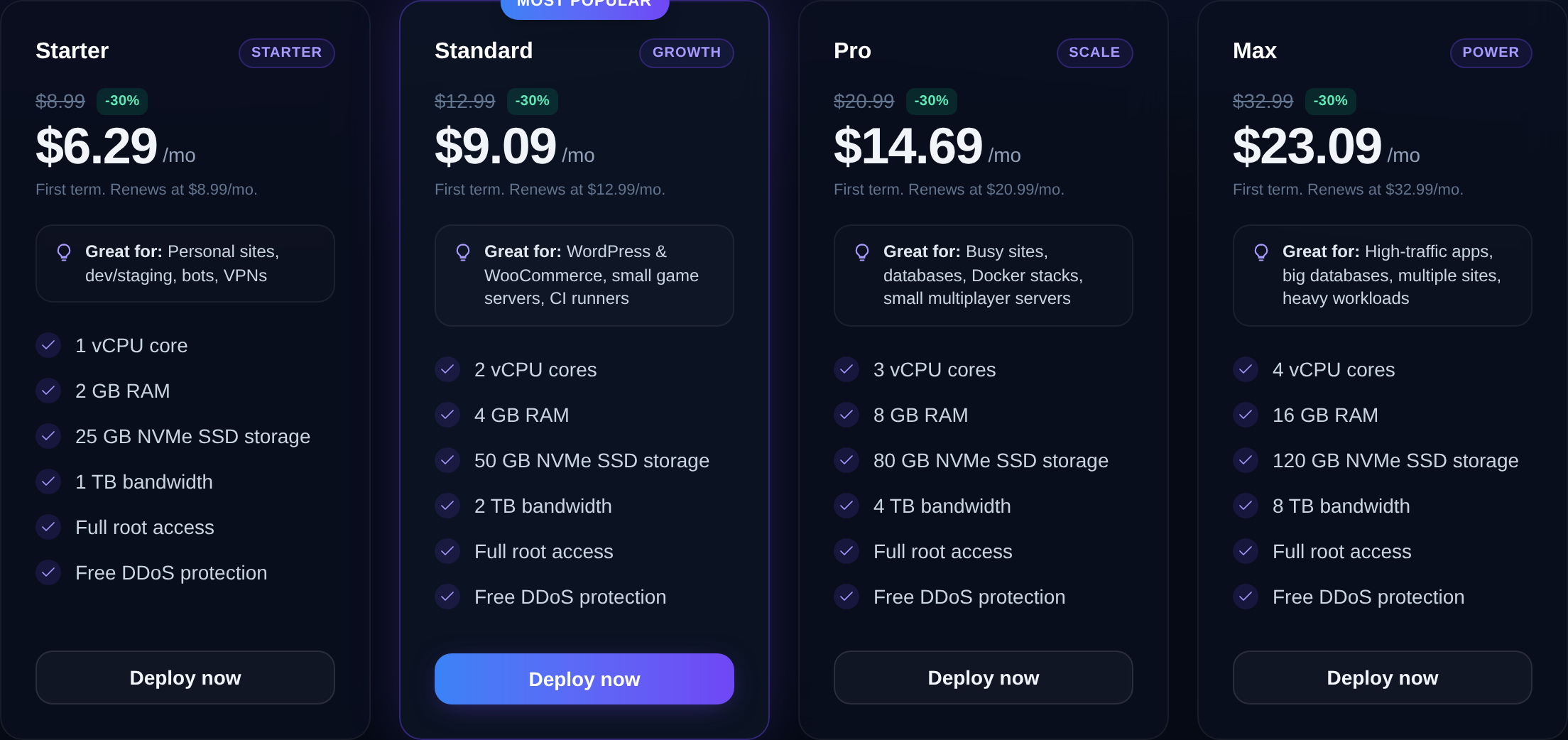
Nxeon gives you NVMe KVM VPS with full root either way — plus one-click images, free migration help and guides that make self-management approachable. If you'd rather offload the admin entirely, managed options remove the maintenance. Compare plans on pricing and see the VPS overview.
FAQ
What's the difference between managed and unmanaged VPS?
On an unmanaged VPS you handle all server administration yourself — updates, security, backups. On a managed VPS the provider handles those tasks and provides support. Managed costs more but saves time and expertise.
Is an unmanaged VPS hard to run?
Less than people fear. With one-click images, automatic updates and a one-time security setup, an unmanaged VPS can be quite low-maintenance. If you're comfortable with basic Linux commands, it's very manageable.
Is a managed VPS worth the extra cost?
If your time is better spent on your business than on server admin, or downtime is costly, yes. Managed hosting buys you expert maintenance and support so you can focus on your site or app.
Can I start unmanaged and switch to managed later?
Often, yes — many hosts let you add management to an existing plan. You can also start managed while you learn, then move to unmanaged for lower cost and more control once you're comfortable.
Deciding how hands-on to be? Compare plans on pricing or get free migration help to move an existing site.
Cloud VPS hosting
Deploy in seconds, not weekends
Nxeon · Nxeon editorial
★★★★★ Straight-talking guides from the team that runs the servers.