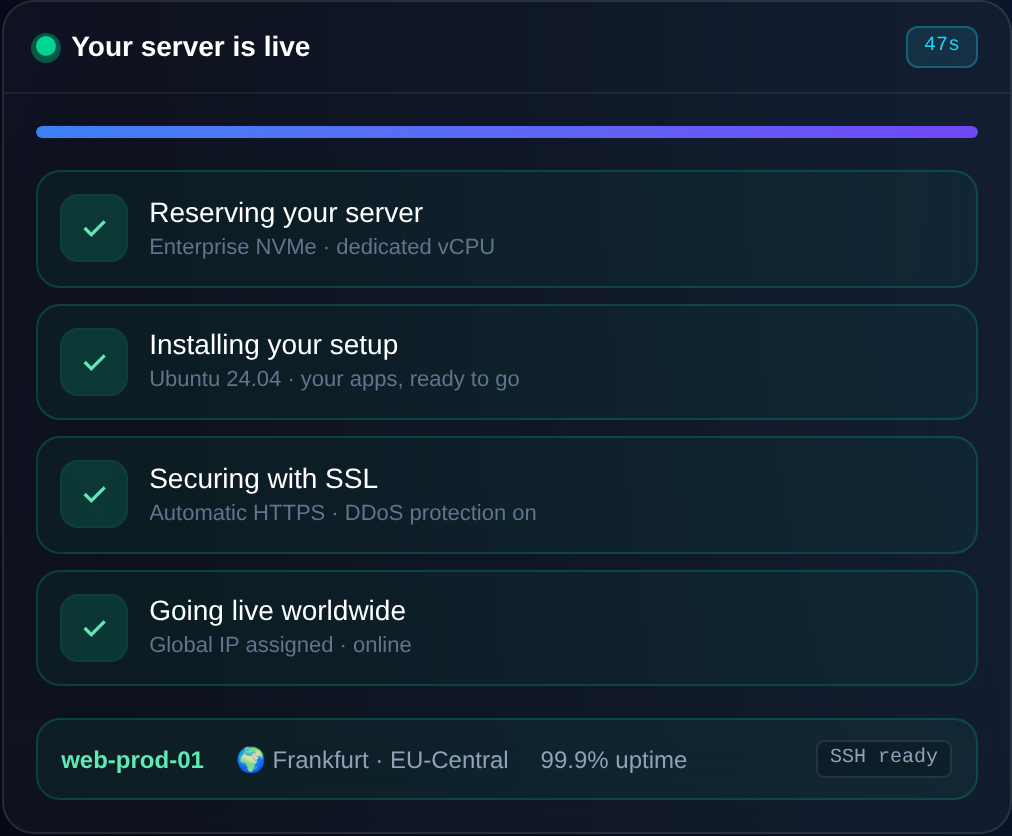
A VPS gives you dedicated resources at a fraction of the cost — but a dedicated server has its place. Here's an honest comparison to help you choose the right one.
A dedicated server gives you an entire physical machine; a VPS gives you a guaranteed slice of one. For the vast majority of projects, a VPS delivers the performance you need at a fraction of the price — but dedicated servers still have their place. Here's an honest comparison.
The core difference
- VPS: a physical server is virtualized into multiple isolated instances. You get dedicated CPU, RAM and storage, full root, and provisioning in minutes — sharing the physical hardware but not each other's resources.
- Dedicated server: the entire physical machine is yours. No virtualization overhead, no neighbours at all, and access to every last resource — but at a much higher cost and slower to provision.
Performance
A quality VPS with KVM virtualization and NVMe storage performs excellently for almost everything — websites, apps, databases, game servers. The virtualization overhead is small. A dedicated server wins only at the extreme end: sustained maximum load, very large databases, or workloads that need specific physical hardware. For most people, a VPS is not a compromise.
Cost
This is the big one. A dedicated server costs many times more than a VPS with comparable *usable* performance, because you're paying for a whole machine whether you use it fully or not. A VPS lets you buy exactly the slice you need and scale up when you grow. See how much web hosting costs for realistic figures.
Scaling and flexibility
- VPS: resize to a bigger plan in minutes; spin up more instances easily. Flexible and fast.
- Dedicated: scaling means migrating to new hardware — slower and more disruptive.
For growing projects, the VPS's easy resizing is a real advantage. Our guide on how to choose a VPS plan helps you size and grow sensibly.
When a dedicated server genuinely makes sense
- You need the full physical machine's sustained performance around the clock.
- You have compliance or licensing requirements mandating single-tenant hardware.
- You run very large databases or specialised hardware needs (specific GPUs, huge local storage).
If none of those apply, a VPS is almost always the smarter buy. If you're comparing against shared hosting instead, see VPS vs shared vs dedicated vs cloud hosting and why a VPS beats shared hosting for a growing site.
Management and responsibility
Both options put the operating system and everything above it in your hands — you're responsible for updates, security and backups on a VPS and a dedicated server alike (unless you buy a managed plan). The difference is scale, not kind: a dedicated server is simply a bigger, single-tenant version of the same responsibility.
That's worth noting because people sometimes assume a dedicated server is "more managed" or "more serious." It isn't inherently — it's the same Linux administration, just on hardware you don't share. If hands-off operation is what you're after, a managed VPS or dedicated server (where the provider handles maintenance) matters far more than the VPS-vs-dedicated choice itself. Our managed vs unmanaged VPS guide covers that decision.
Start small, scale deliberately
For most projects the smart path is to start on a right-sized VPS and let real usage guide you:
- Begin with a plan that fits today plus a little headroom — sizing help is in how to choose a VPS plan.
- Monitor actual load. If you're consistently near capacity at peak, resize up — a few minutes on a VPS.
- Only consider dedicated once you've genuinely maxed a large VPS at sustained load, or hit a compliance or hardware requirement that demands single-tenant hardware.
Most projects never reach that point. The combination of KVM virtualization and NVMe storage means a VPS covers an enormous range of workloads at a fraction of dedicated-server cost — which is exactly why it's the default choice for websites, apps and game servers. When a VPS truly isn't enough, you'll know from the data, and migrating up is a planned, one-time move.
Where Nxeon fits
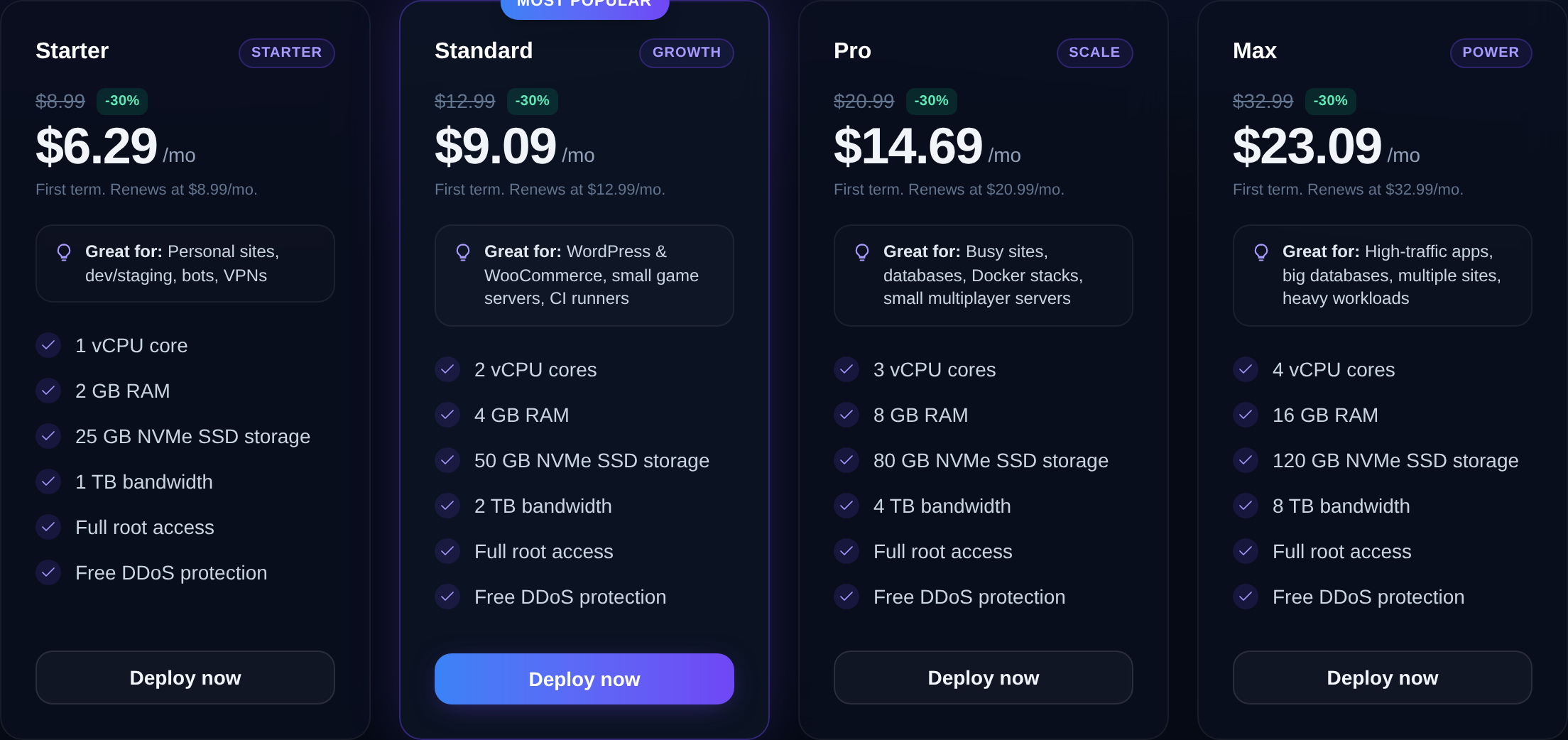
Nxeon offers NVMe KVM VPS with dedicated, non-oversold resources and full root — dedicated-server-grade control and performance for typical workloads, without the dedicated-server price. Start a project in minutes and resize as you grow. Explore the VPS overview or compare plans on pricing.
FAQ
Is a VPS as fast as a dedicated server?
For almost all workloads, yes — a KVM VPS with NVMe storage performs excellently. A dedicated server only pulls clearly ahead at sustained maximum load or with very large, specialised workloads.
Why is a VPS so much cheaper than a dedicated server?
A dedicated server means paying for an entire physical machine. A VPS lets many isolated instances share the hardware efficiently, so you pay only for the guaranteed slice you use — a fraction of the cost.
When should I choose a dedicated server?
When you truly need a full physical machine's sustained performance, have single-tenant compliance requirements, or run very large databases or specialised hardware. Otherwise a VPS is the smarter, cheaper choice.
Can I move from a VPS to a dedicated server later?
Yes. Start on a VPS, and if you genuinely outgrow it you can migrate to dedicated hardware. Most projects find that resizing to a larger VPS is all they ever need.
Not sure which fits? Explore the VPS overview or compare plans on pricing.
Cloud VPS hosting
Deploy in seconds, not weekends
Nxeon · Nxeon editorial
★★★★★ Straight-talking guides from the team that runs the servers.