Shared hosting is fine until it isn't. Here are the honest signs you've outgrown it, and why a VPS gives a growing site the speed, control and headroom it needs.
Shared hosting is a fine place to start — cheap, simple, no server knowledge required. But as a site grows, the very thing that makes it cheap (sharing one server among many customers) becomes the thing that holds it back. Here's an honest look at when you've outgrown shared hosting and why a VPS is the natural next step.
How shared hosting actually works
On shared hosting, hundreds of sites live on one server, sharing its CPU, RAM and disk. The provider oversells deliberately — most sites are quiet most of the time. That's efficient and cheap, but it means:
- Your resources aren't really *yours*; a busy neighbour can slow you down.
- There are strict limits — CPU caps, process limits, "resource limit reached" errors.
- You can't control the software stack, PHP settings or caching.
For a small, low-traffic site, none of that bites. For a growing one, it does. Our shared hosting vs VPS and shared hosting vs VPS for a growing site pieces compare them directly.
The honest signs you've outgrown it
You're ready for a VPS when:
- Your site feels slow under traffic, or the admin area lags.
- You hit resource limit warnings or get throttled at peak times.
- You need to install software or change server settings the host won't allow.
- You want proper caching (Redis, OPcache, FastCGI) that shared hosting blocks.
- You're running a store or web app, not just a brochure site.
If two or three of these ring true, shared hosting is now the bottleneck.
What a VPS gives a growing site
A VPS fixes the root cause by giving you a dedicated slice of a server:
- Dedicated CPU and RAM — no noisy neighbours stealing your performance.
- Full root access — install anything, tune PHP, add caching, run Docker.
- Real speed — NVMe storage plus caching you actually control.
- Room to grow — resize to a bigger plan in minutes as traffic climbs.
The trade-off is a bit more responsibility, but one-click images, managed options and guides make that manageable — see managed vs unmanaged VPS. For sizing, our how to choose a VPS plan guide helps, and best VPS for a small business website covers the business case.
Isn't a VPS more expensive?
A little — but you're paying for dedicated resources and control, not a slice of an oversold box. And it's still far cheaper than a dedicated server (see VPS vs dedicated server). For a site that earns its keep, the speed and reliability easily justify the modest step up. Our how much web hosting costs guide puts real numbers on it.
The costs of staying too long on shared hosting
It's easy to keep limping along on shared hosting because switching feels like effort. But staying too long has real costs that quietly compound:
- Lost visitors and sales. Slow pages increase bounce rates and hurt conversions. Every second of load time on a growing site is measurable lost business.
- Worse SEO. Site speed is a ranking factor, and shared-hosting slowdowns hold you back in search results just as you're trying to grow.
- Firefighting instead of building. Resource-limit errors, throttling and mysterious slowdowns eat time you should spend improving the site.
- A hard ceiling on features. When you can't install the software or run the caching your project needs, growth stalls — not because of your idea, but because of your hosting.
Weighed against a modest monthly increase for a VPS, the cost of *not* moving is usually the larger number for any site that matters.
Making the move painless
The main thing holding people back is fear of the migration itself — but done right, it's low-risk and often free:
- Build and test on the new server first, then switch DNS, so there's no downtime window — the full method is in how to migrate WordPress to a new VPS.
- Use free migration help if you'd rather not touch the command line; many hosts move the whole site for you — see how to migrate your website to Nxeon (free migration).
- Right-size the new plan to your current traffic with a little headroom, knowing you can resize as you grow.
- Take the chance to improve — add caching, backups and proper security while you're setting up, so you land better than you left.
Once you've moved, the day-to-day difference is immediate: faster pages, no throttling, and the freedom to build whatever the site needs next. The jump that felt daunting turns out to be the thing that unblocks your growth.
Where Nxeon fits
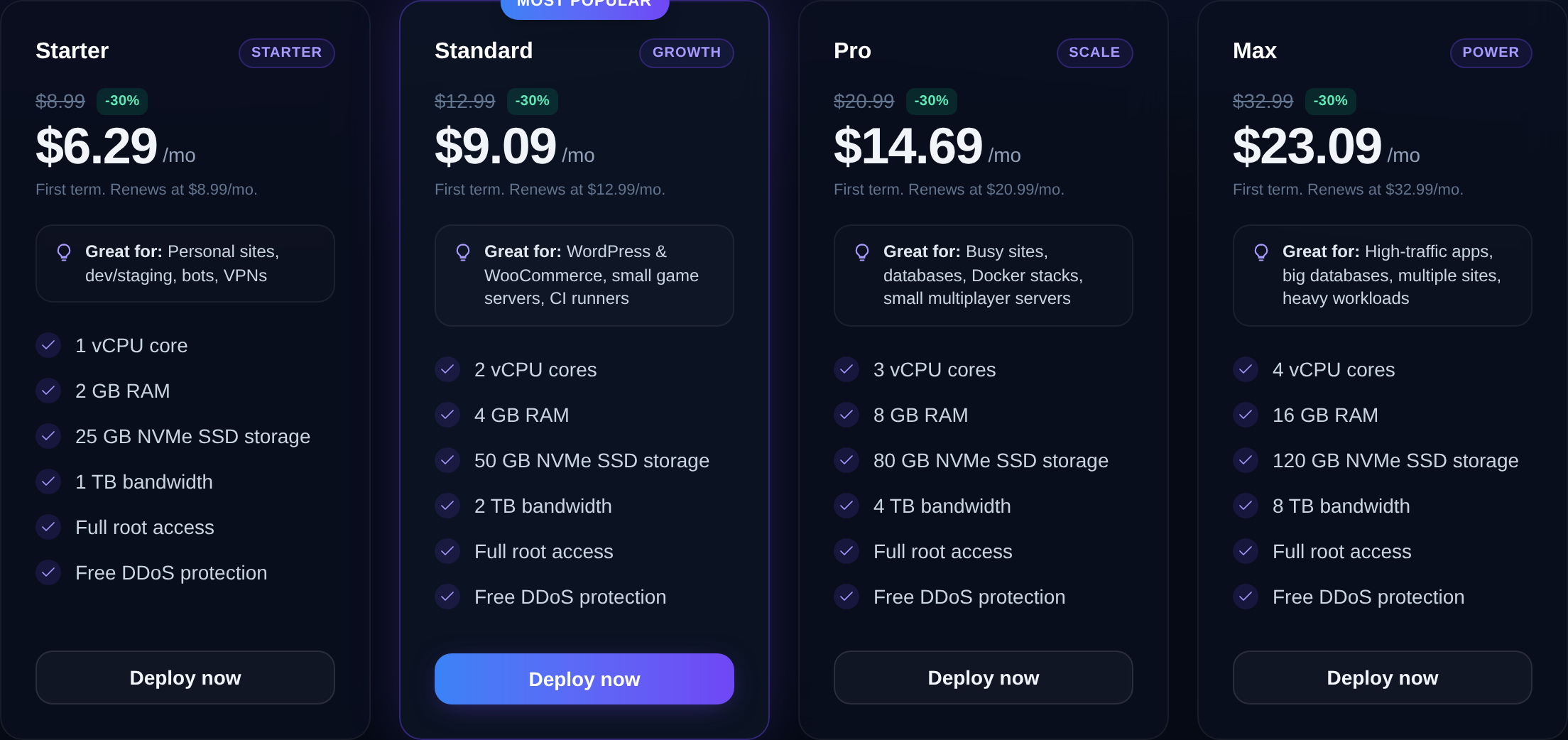
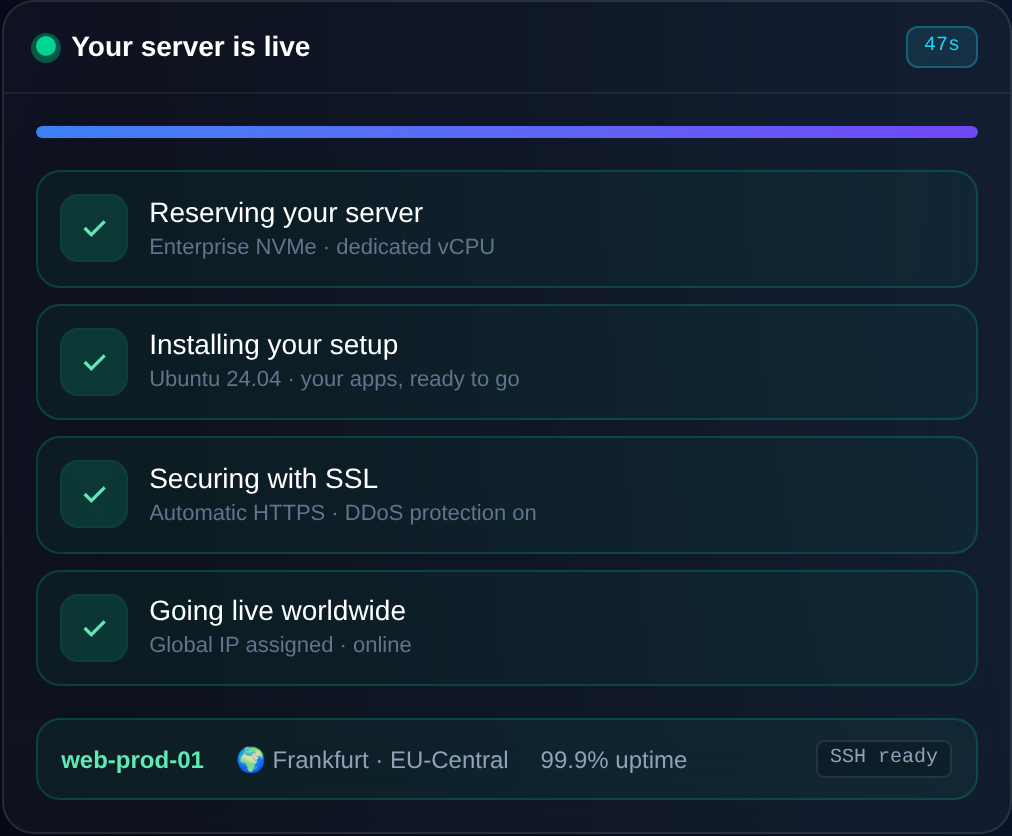
Nxeon makes the jump easy: NVMe KVM VPS with full root, one-click images, and free migration help to move your site off shared hosting without downtime. Compare plans on pricing, see the web hosting options, or read the VPS overview.
FAQ
When should I move from shared hosting to a VPS?
When your site slows under traffic, you hit resource limits or throttling, or you need software and settings the shared host won't allow. Those are the signs the shared model has become your bottleneck.
Is a VPS worth it for a growing website?
Yes. A VPS gives dedicated CPU and RAM, full control over the stack, real caching and NVMe speed — everything a growing site needs and shared hosting can't provide, at a fraction of a dedicated server's cost.
Will moving to a VPS cause downtime?
Not if you migrate carefully — build and test on the new server first, then switch DNS. Many hosts offer free migration that handles this for you, keeping the old site live until the switch completes.
Is a VPS harder to manage than shared hosting?
It asks a bit more, but one-click images, managed plans and guides make it very approachable. You trade some convenience for far more speed, control and headroom — a worthwhile deal for a growing site.
Outgrowing shared hosting? Get free migration help or compare plans on pricing.
Web hosting
Deploy in seconds, not weekends
Nxeon · Nxeon editorial
★★★★★ Straight-talking guides from the team that runs the servers.